
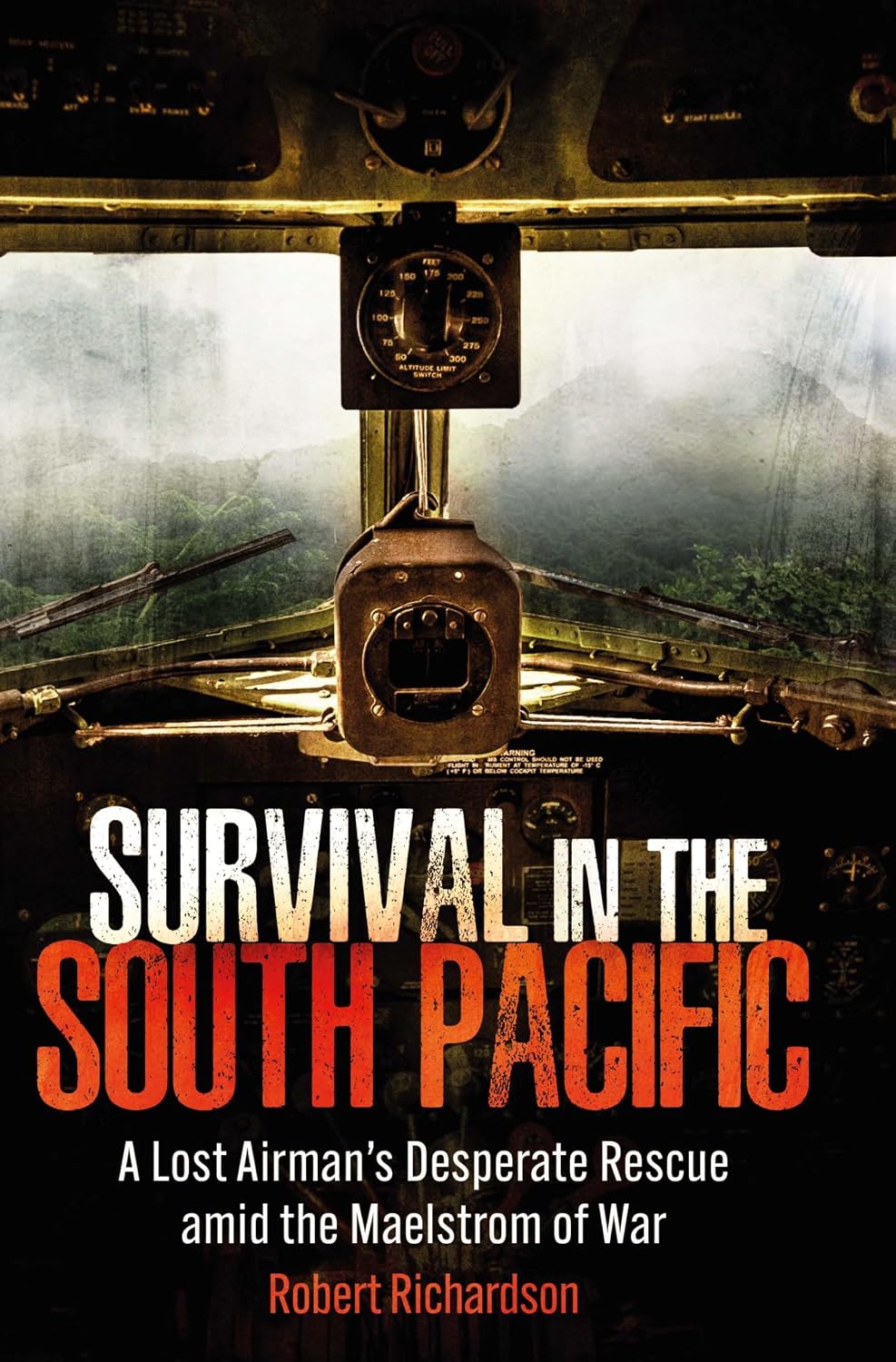
Survival in the South Pacific: A Lost Airman’s Desperate Rescue amid the Maelstrom of War
Product details
| Management number | 233370883 | Release Date | 2026/06/27 | List Price | US$8.00 | Model Number | 233370883 | ||
|---|---|---|---|---|---|---|---|---|---|
| Category | |||||||||
Most narratives of the War in the Pacific generally adopt either of two perspectives. The "30,000 foot view" offers broad insights into the War's causes, strategies, actions and consequence, often informed by newly discovered or declassified material related to intelligence, politics, and personalities. In contrast, the "6 foot view" offers first-hand experiences of individuals at war. Their histories, training, combat challenges, and outcomes, often presented without reference to broader aspects of the global war raging around them.The present narrative, Survival in the South Pacific, provides both. Stories of individuals at war are presented within the vortex of world warfare that had taken all from their homes and swept them to the remotest places on the globe, serving their country in ways impossible for them to have imagined in their peacetime lives. Among the individuals presented in Survival in the South Pacific, the primary focus is on the life and service of AAF officer Lt. Leonard Richardson, who was lost on a routine troop carrier mission in September 1943.Survival in the South Pacific provides all-important context for these personal stories. It first introduces the men in this narrative, describes where they served, how they came to be there, and what they did, and then explains the over-arching military strategy that required their service at that time and place. It is a harsh reality that this war and its terrible consequences were inevitable. Following WWI, Japan had brought itself onto a collision course with western powers and reckoned that securing its empire would require separate wars with Russia, Great Britain, and the United States. The events of the 1920's and '30's made America the logical first adversary. Other context is equally important for the individuals who are described in this narrative. For example, President Roosevelt and his circle of advisors had done exceptionally well in mobilizing America for war in the face of a steady popular opposition to war in Europe. But it is also true that Roosevelt and his advisors did less well in diplomacy aimed at restraining Japan's global ambitions. The steadfast American foreign policy for Asia of the late 1930s unable to deflect Japan from its chosen path.And within the military sector, American war plans poorly reflected the strength of its military, and the limits imposed by America's far-flung and indefensible territories. The "Germany First" policy adopted by American and British civilian and military leadership resulted in a deeply uncertain future for forces in the South Pacific and Australia. By the end of 1941 the U.S. was unprepared for the global war that came to it, even as the pipeline of men and materiel began to fill.Survival in the South Pacific also include other topics frequently lacking in Pacific War narratives: the impact of the war on the indigenous islanders; the horrible impact of disease in the early years of the Pacific war; and the longer-term personal consequences that befell men who stood in service to their country.This narrative has as its primary arc the events of September 1943, a time when America began advancing from its foothold on Guadalcanal into the northern Solomon Islands. Survival in the South Pacific describes the loss of an aircraft on a routine flight, and the events leading up to a rescue attempt on a god-forsaken island in the most primitive of South Pacific societies by men utterly alien to each other, and the results that ensued for all.This book is based in large part on previously unpublished documents, histories, and memoires. Read more
| ASIN | B0DDQMFZSX |
|---|---|
| XRay | Not Enabled |
| ISBN13 | 978-1636244167 |
| Language | English |
| File size | 44.5 MB |
| Page Flip | Enabled |
| Publisher | Casemate |
| Word Wise | Enabled |
| Print length | 599 pages |
| Accessibility | Learn more |
| Screen Reader | Supported |
| Publication date | September 30, 2024 |
| Enhanced typesetting | Enabled |
Bestseller ranking
World War II


Customers who viewed this product also viewed
Sacraments






Correction of product information
If you notice any omissions or errors in the product information on this page, please use the correction request form below.
Correction Request Form